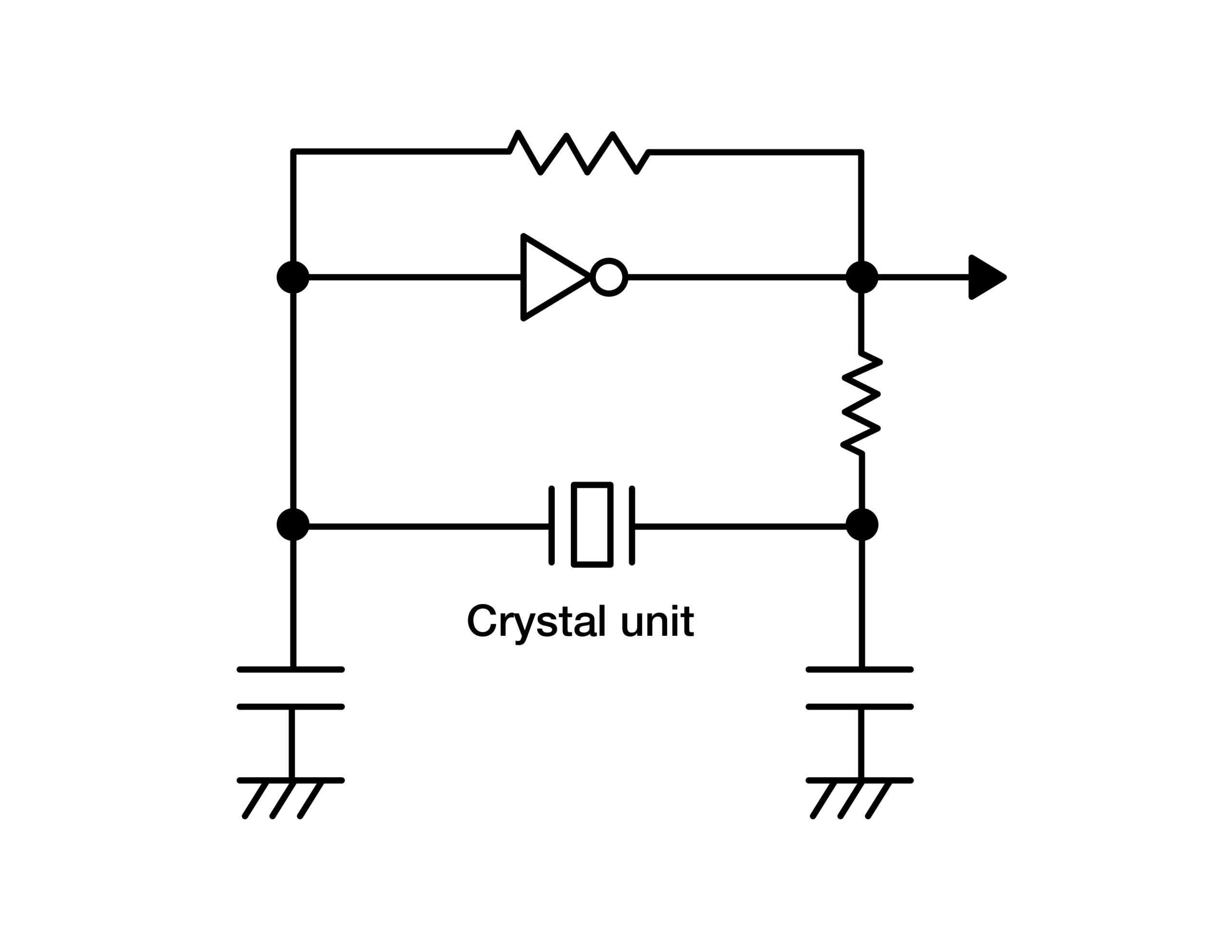
In this post, the professor begins a two-part series on mitigating the effects of crystal oscillator aging in precision timing applications.
Aging in crystal oscillators directly impacts timing applications by causing a gradual and irreversible drift in the oscillator’s output frequency over time. Particularly in precision timing applications requiring radiation tolerance, low noise and jitter, and/or high-temperature operation, exceptional mitigation techniques must be employed in the manufacturing process to minimize the effects of aging.
Aging refers to the gradual change in the crystal oscillator’s output frequency over time. This phenomenon is primarily due to physical and chemical changes within the quartz crystal and its environment. This drift, typically measured in either parts per million (ppm) or parts per billion (ppb) per year, can lead to significant issues in applications that require precise and stable timing references.
There are many causes of crystal aging, but two of the most significant, by far, are mass loading and stress changes.
Mass loading refers to subtle changes in the mass of the quartz resonator due to absorption or desorption of contaminants on the crystal surface that alter its mass and, thus, its resonant frequency. All quartz crystals are processed in clean rooms and are sealed in very clean environments, either in a vacuum or in a non-reactive, inert nitrogen-helium atmosphere. Nonetheless, some level of undesired material always remains. This is typically a very small amount of water vapor that can cause mass loading changes, resulting in frequency aging.
Stress changes pose another concern so great pains are taken to minimize the stress on the crystal. However, some residual stress is always present, especially in the attachment of the crystal to its package and the oscillator circuitry. This mounting structure usually consists of a very-low-stress metallic ribbon connected to the quartz via a very-low-outgassing epoxy or adhesive. Nonetheless, over time, some changes in the stress from this mounting structure will affect the crystal and its frequency. Secondarily, there can be changes in the internal stresses of the crystal’s metal electrodes and even within the quartz itself.
In the next post I will discuss the effects and common mitigation techniques.