Browsing Category

The Prof’s Posts

23 posts

Mitigating the Effects of Crystal Oscillator Aging in Precision Timing Applications

In this post, the professor discusses the effects of crystal oscillator aging and methods used to minimize their impact on performance Key Effects of Aging on Timing Applications Frequency Drift: As the oscillator ages, its frequency can increase or decrease, causing the system clock to run slightly faster or slower than intended. This is particularly problematic in systems where even minor deviations can accumulate into substantial timing errors over hours, days, or years. Holdover Performance: In critical timing systems—such as in satellites, network infrastructure, and measurement equipment—oscillators often serve as backup clocks when external references (like GPSs) are unavailable. During…
Causes of Crystal Aging

In this post, the professor begins a two-part series on mitigating the effects of crystal oscillator aging in precision timing applications. Aging in crystal oscillators directly impacts timing applications by causing a gradual and irreversible drift in the oscillator’s output frequency over time. Particularly in precision timing applications requiring radiation tolerance, low noise and jitter, and/or high-temperature operation, exceptional mitigation techniques must be employed in the manufacturing process to minimize the effects of aging. Aging refers to the gradual change in the crystal oscillator’s output frequency over time. This phenomenon is primarily due to physical and chemical changes within the…

Oranges, Apples and Cherries in Timing Oscillator Noise Specs

There’s a popular saying that goes, “lies, damned lies and statistics.” While this statement is perhaps a bit strong to apply to the inconsistencies of engineering specifications, when dealing with oscillator noise specs, there is an issue of comparing oranges, apples and cherries. An important part of engineering design is delivering the required performance for the application at the least cost. The emergence of MEMS (Micro-Electro-Mechanical-System) oscillators has enabled dramatic cost reductions in many digital consumer and commercial products. But in many high-performance applications, there’s no replacement for quartz oscillators. When it comes to specifying and measuring phase noise and…

The Professor Talks About the Importance of Timing in Advanced Embedded Systems

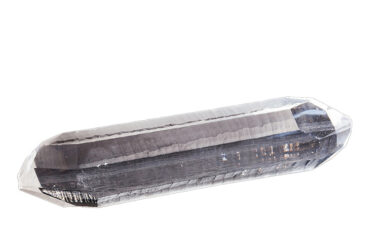
Quartz is relatively abundant in nature and easy to grow in a very pure form. What sets it apart from other piezoelectric crystals is that it can be made to vibrate in very controlled and stable ways. Thus, a properly fashioned quartz resonator can act as an ultra-stable mechanical frequency source that can be coupled to an electronic oscillator circuit.

The Importance of Crystal Mounting Structure

Quartz is relatively abundant in nature and easy to grow in a very pure form. What sets it apart from other piezoelectric crystals is that it can be made to vibrate in very controlled and stable ways. Thus, a properly fashioned quartz resonator can act as an ultra-stable mechanical frequency source that can be coupled to an electronic oscillator circuit.

How are Oscillators Tested for Radiation?

All of these space environments have unique radiation environments. There are no exact ways to duplicate the radiation exposure of each space environment, rather the best that can be done is to create analog radiation environments that can simulate the actual environments in space.

Testing of Precision Quartz Crystal Oscillators

Quartz is relatively abundant in nature and easy to grow in a very pure form. What sets it apart from other piezoelectric crystals is that it can be made to vibrate in very controlled and stable ways. Thus, a properly fashioned quartz resonator can act as an ultra-stable mechanical frequency source that can be coupled to an electronic oscillator circuit.